
Watch the cast interviews on the Generasian Channel.
It’s a 100-degree day when we sit down with the casts of The Lion King and Aladdin on Broadway, but that hasn’t stopped our stars from looking fresher than ever.
The New Amsterdam Theatre is a venue that keeps your head tilted up, with floral sculptures climbing its arched doorways and art nouveau awnings that have echoed the songs of Aladdin since 2014 (and The Lion King for nearly a decade prior). Several winding balustrades and sprawling emerald carpets later, I nervously shuffle my cards in front of an enormous display of scarlet feathers. Laughter erupts from the green room, followed by boisterous singing.
Aladdin and The Lion King are, of course, trailblazers in theatrical history—acclaimed for creating stages where vibrant stories flourish, and diverse talent make their names. While some members made their exciting Broadway debuts not too long ago, others have been imbuing each show with their talent since opening night. Today, the actors open up about the nerve-wracking honor of nurturing dreams for children of color, the ways authenticity has been built into Disney on Broadway since the beginning, and why we need diverse storytelling now more than ever.
Bringing Dreams to Life
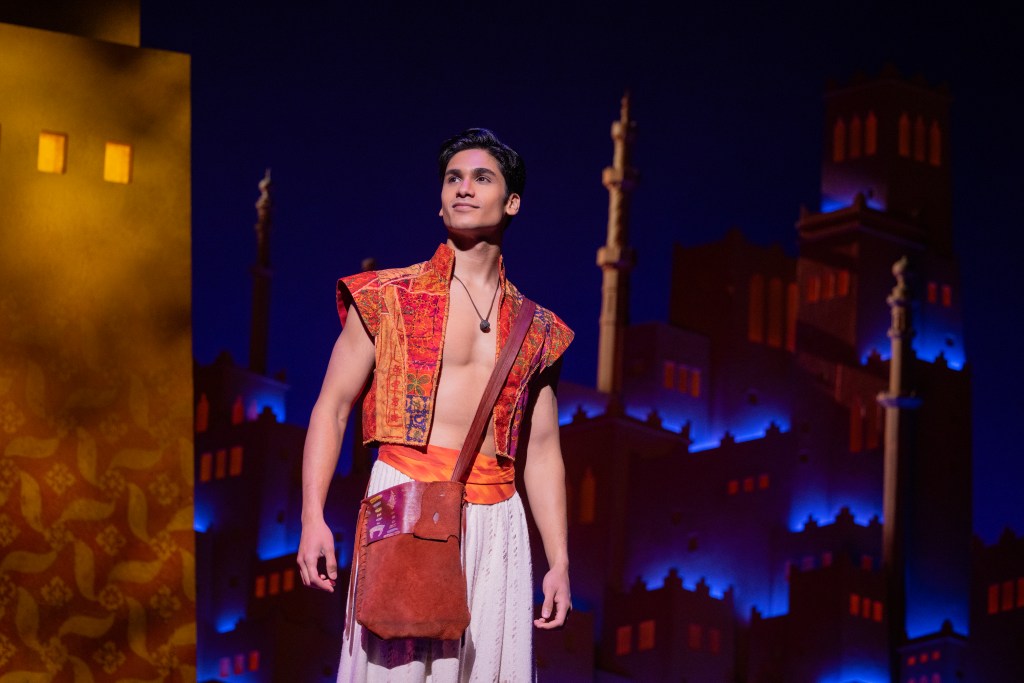
For Adi Roy, the past few weeks have been a blur. Having made his Broadway debut on June 4th, the fresh prince of Agrabah is all humility, still basking in the fever dream of it all.
GENERASIAN: What was it like getting the news? How did you prepare to step into the shoes of Aladdin?
ADI: “Oh my gosh, yeah—it was wonderful! I’ve been doing this role on the road, on tour, for a little bit over a year and a half, but nothing really prepares you to do it on Broadway.
That night I came out as Aladdin—honestly I don’t remember it too well, but it was so much fun to have family and friends all there to support me—it just reminded me how much support I’ve gotten all this time.”
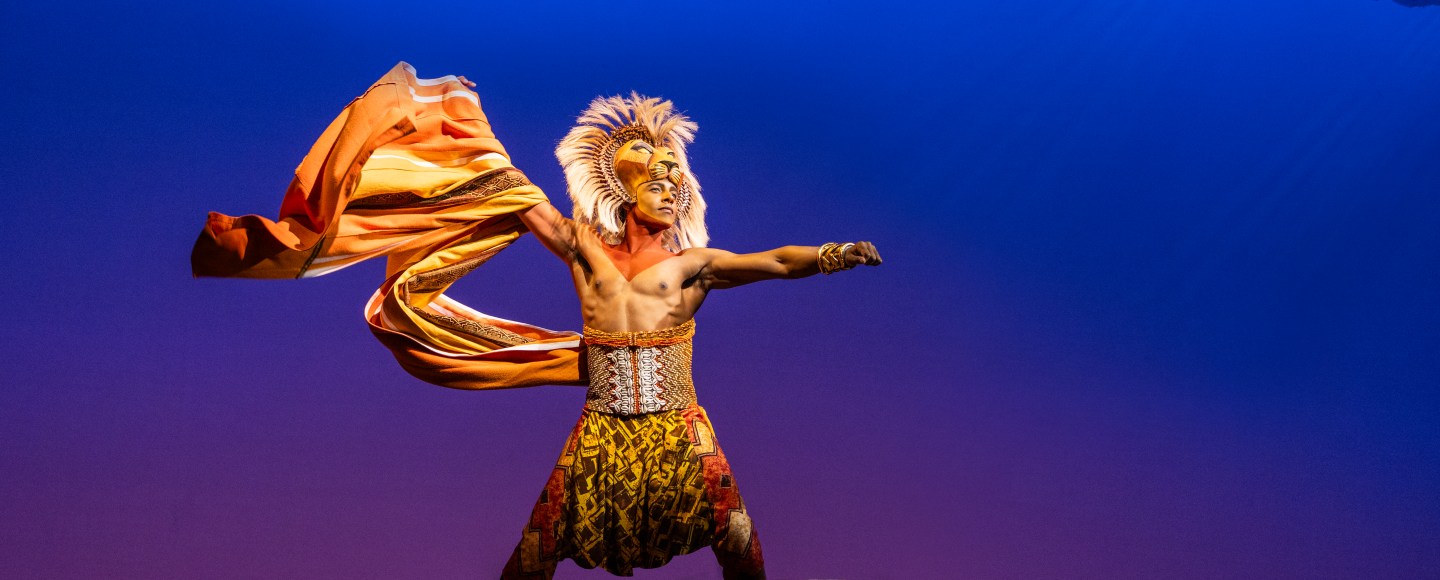
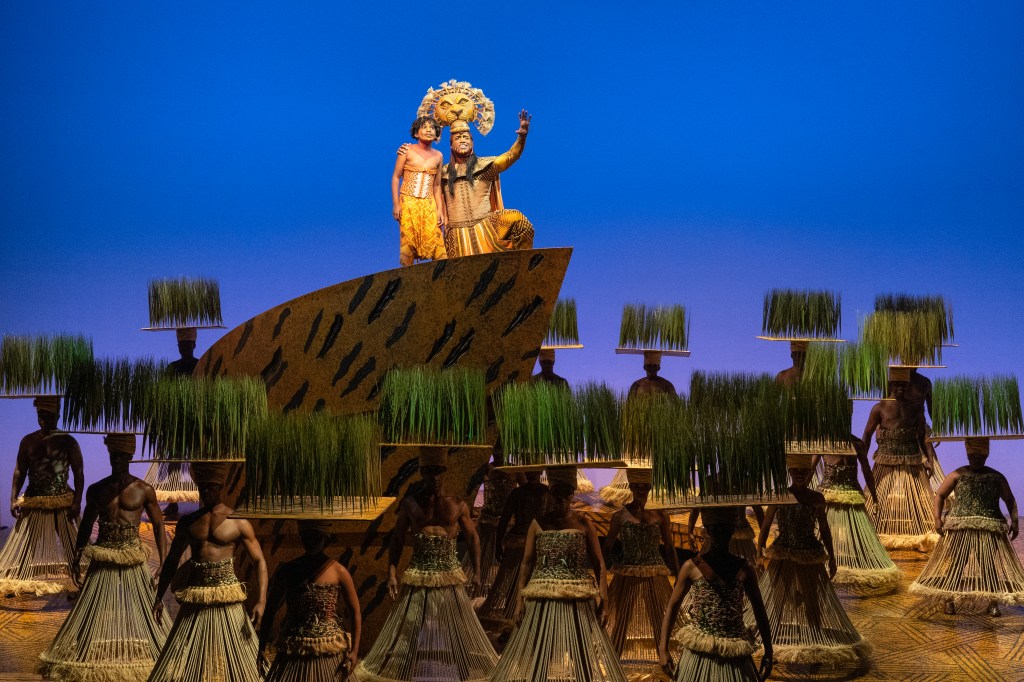
That dazzling spotlight of being the leading man won’t wear off anytime soon—it’s been one year since Vincent Jamal Hooper was crowned as Simba in The Lion King, and the prince of the Pridelands still fondly recalls every wide-eyed child he meets. Being part of Disney in any capacity, he says, comes with a huge responsibility.
VINCENT: “I’m very aware of that relationship between performer and audience. Going out and doing stage door, watching a young Black boy pose with a photo of you on the wall…there’s a real subtle but important work that we’re doing here. A lot of the effects we’re having on people—we might not see how that plays out, but in 10 years, maybe someone’ll be in rehearsal with me and be like ‘I saw you in Lion King when I was 8!’ So when I do have these moments of engagement, I try to make sure everyone feels seen, because they’ve been so gracious in sharing their time with us.”
GENERASIAN: Was there a meaningful interaction that sticks out to you?
VINCENT: “Yeah! There was a little girl who came backstage—I was just walking by, and she stopped in her tracks and was like, ‘Is it really you?! You’re Simba!’ You get caught up in the beautiful innocence of a child, and it’s such a wonderful thing to be reminded of. To try and think of yourself in the way this young person sees you—see how that brings a bit of magic to life.”

“It’s a woman’s world.”
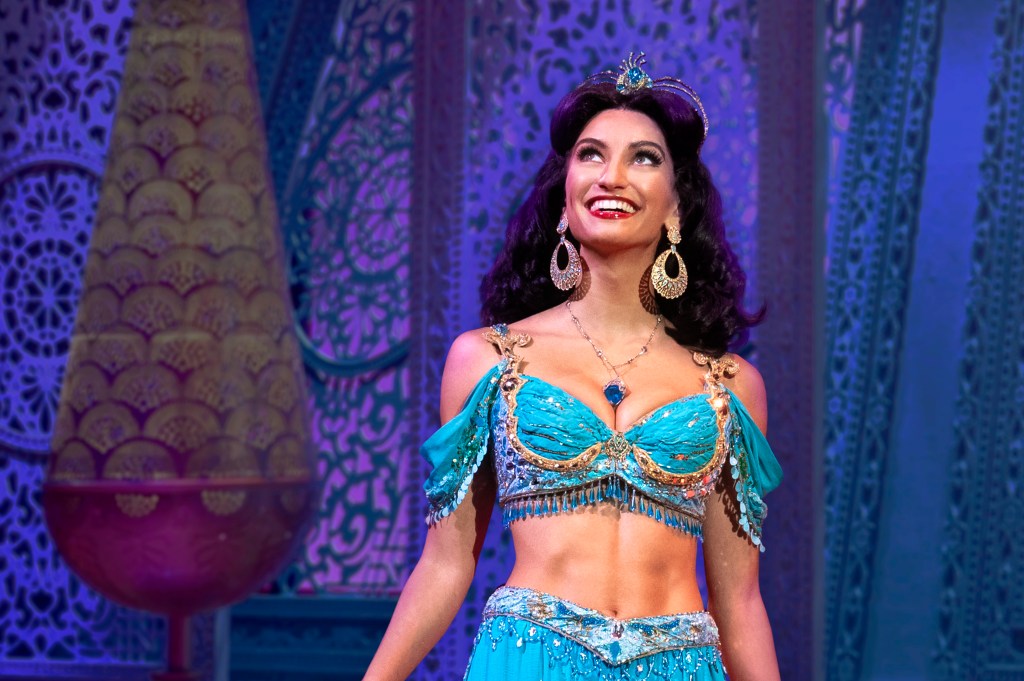
For Sonya Balsara, the source of that magic runs deep. Having debuted as Jasmine last January, she moves as though the princess herself leapt off the silver screen.
GENERASIAN: Jasmine is such an icon among Disney princesses, as a strong female lead and a woman of color. Did these considerations ever affect your portrayal of her character?
SONYA: “Absolutely! I always think about my grandmother, who I never had the opportunity to meet—she passed away before I was born. But she was an undefeated criminal lawyer in India. She was the breadwinner, which was sort of unheard of in the 1950s, and raised my dad and aunt. I think about the barriers that she broke to be who she was—and that’s exactly the kind of person Jasmine is, you know? To be a woman of color in an era where people aren’t expecting you to be a leader, be independent, and have your own voice. So every day, when I step onstage, I carry her with me.”
Anju Cloud, Jasmine’s radiant understudy and a spectacular member of the ensemble, infuses her own personality into each performance.
ANJU: “I loved Jasmine growing up. I think what’s so beautiful about her is her intense curiosity for life—she’s so grounded, and knows exactly what she wants from the beginning. That kind of personality type she has [is what] catapults her into the story. I love getting to put my own curiosity, as Anju, of life into her—it’s just so fun to do.”
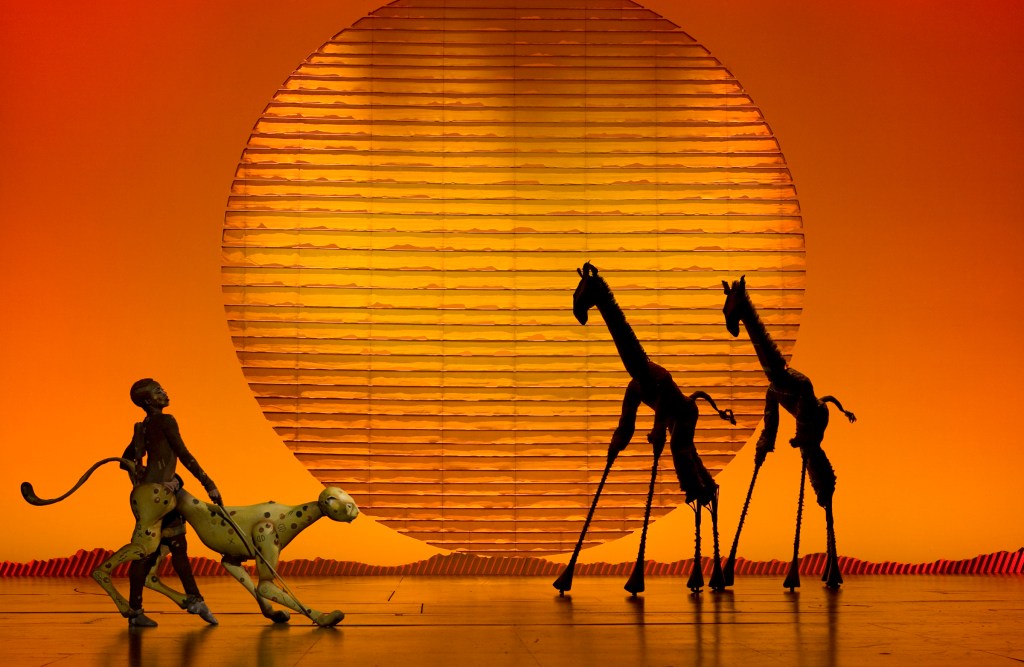
The leading ladies of The Lion King, too, continue to break the mold. Styled in a sage green blouse and trousers, Pearl Khwezi—Nala—speaks with all the eloquence and regality of a warrior queen. Next to her sits Sasha Caicedo, the masterful dancer behind the elegant cheetah puppet.
GENERASIAN: How does it feel to embody these strong, complex role models that empower so many young girls?
PEARL: “It’s always so touching to see how young girls look at us on stage—afterwards, you see them taking pictures with a poster of Nala, and they see themselves in her. Then if I walk past, they’ll see, she’s just a person like me! This is just a lady! It’s so important that young girls know they can do whatever it is they put their minds to, because this young girl did it.”
SASHA: “There’s a saying that goes, ‘it’s a man’s world.’ It’s a woman’s world as well—a woman can also carry the family, can be that strong character, and be the head, you know? So it’s beautiful to be the lionesses, and strong women on stage that other girls can see and say, ‘I can do that, too!’”

Inspiring Voices, Healing Stories
Both casts also boast a fair share of their original members: Dennis Stowe, who captures unsuspecting hearts as the charismatic Jafar, glides into the room with a glowing smile.
GENERASIAN: Even though you’re a professional villain, I heard you’re also a part of Broadway Inspirational Voices! Can you speak a little on that?
DENNIS: “I certainly can! We’ve been around for about 30 years—it was created by Michael McElroy as a response to the AIDS crisis, to raise money for people with AIDS. We started out with maybe 12 people, and it’s grown over the years into a non-profit. We’re still singing, inspiring, and motivating people…healing people with music. I’ve been apart of it for 20 years now—I don’t really sing in it anymore, now I’m more behind the scenes, directing the concerts and events we have.”
Even Jafar, it seems, has a heart of gold.
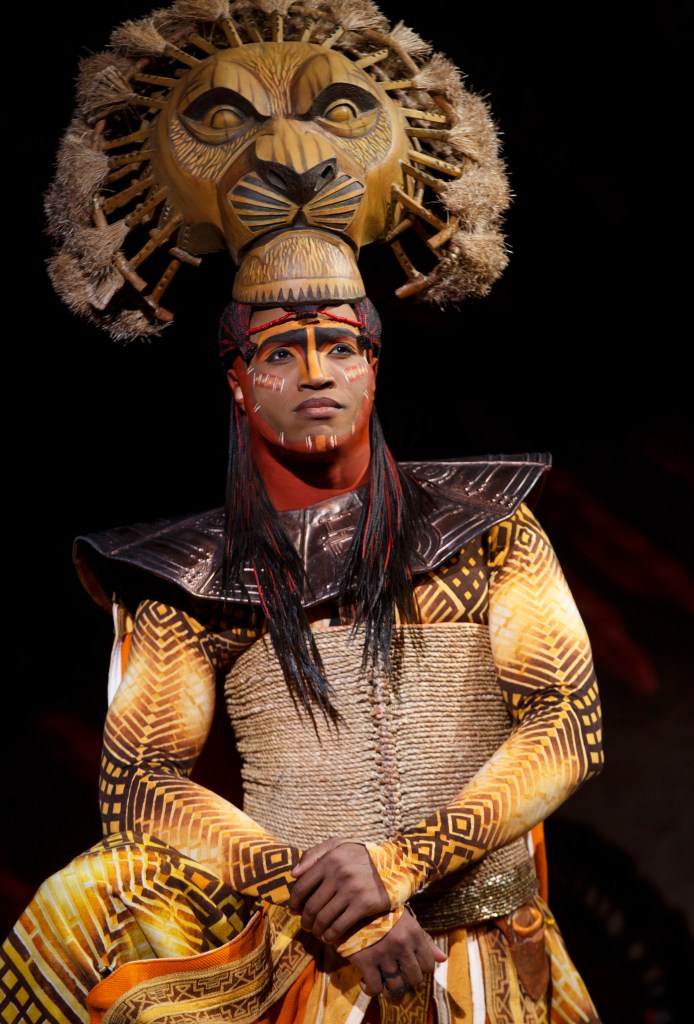
Similarly, L. Steven Taylor—a.k.a. Mufasa—has been with The Lion King since 2005. The accolades he’s accumulated over the years—actor, performer, and now writer/director in the making—are as impressive as the character he embodies.
GENERASIAN: As everyone’s beloved king, can you speak on the importance of seeing people of color represented in positions of power?
L. STEVEN: “It’s super important, across the board—I mean, seeing people of color in the writing rooms and behind the table, not just in front of the camera, provides a space for different perspectives that haven’t previously been seen. And it’s profitable—we have to continue to think that way. If your writing room and production team are diverse, that is automatically going to make your audience more diverse, which means people are going to consume your product. Not only because it’s the right thing to do, but also for the longevity of our business. The landscape of what theater, TV, and film looks like is changing, and we have to catch up to what it’s changing to.”
GENERASIAN: Building authenticity from the ground up.
L. STEVEN: “From the ground up! If you, me, and Michael [James Scott] are all in the same room—Michael is a gay Black man, I am a straight dad, you are an Asian journalist. Our perspectives are going to elevate because we have differences to bring to the table; it’s not just the same type of person contributing.”
Michael James Scott, Broadway’s own Genie (who hardly needs an introduction), is clad in an electric yellow suit that rivals his effervescent energy. L. Steven matches him in bold emerald green, and the self-proclaimed “lemon and lime” duo set the room alight the moment they stroll in. For them, the impetus behind Broadway’s longevity is the community’s ability to embrace intersectionality.
GENERASIAN: We’re celebrating 30 years of Disney on Broadway. Why do you think all your characters—and the stories of Aladdin and The Lion King—continue to resonate with underrepresented communities, even after all this time?
L. STEVEN: “Most people have experienced loss. If you’re lucky, you’ll get to experience love. The layers of what Mufasa has to go through as a parent, from trying to impart lessons on his child, is one that specifically resonates with me as a dad in real life. I think the parents recognize that as well, the fear of your child being in danger. The older people resonate with Rafiki. The characters go on so many journeys, so every time you see the show, you respond to a different part of the story. That has been true for the 27 years we’ve been open—you see it from a different perspective every single time you come back to it.”
GENERASIAN: Do you think being “everyone’s favorite father” has translated into your own relationship with your children?
L. STEVEN: [Laughs] “I don’t know! The weight of trying to live up to being “everyone’s favorite father” put me in a bind when I first started playing the show. He’s everybody’s favorite father because he’s flawed. Everybody’s made mistakes; the difference with Mufasa is that he recognizes, acknowledges, and admits it, then tries to move past it. Seeing a man do that—especially when society is telling us that [men] aren’t supposed to admit our mistakes. We push through, double down, keep it moving. That, I think, is what makes him the favorite dad.”
MICHAEL: “For me—people want to love you, this entity that is the Genie. There are genies in a lot of different cultures, and in the film it was this blue, sort of generic entity that could be a universal thing. And now it’s taken on such an incredible legacy, because Disney on Broadway’s production chose to have a Black man in the center of this role. How do we take this almighty powerful force and have it be a black man?” [Laughs] “There’s so much to dissect about why it’s monumental on so many levels, and why I feel so honored to try to fill the shoes that this role brings.
“I think part of it is just…the joy. We all want to have joy in our life, love, we all want to laugh—if you don’t want to laugh, something’s wrong! Those are all universal things. While everybody’s favorite father is Mufasa, the Genie represents everyone’s friend. Hype friend.”
L. STEVEN: “Favorite uncle!”
MICHAEL: “Oh my God, yes. He’s the epitome of a favorite uncle, who’s going to hype you up, really make you feel good. It’s a beautiful thing to be a man of color in that role, and portraying what that is for people’s ether, if you will.”

Don Darryl Rivera, Aladdin’s Iago, is another show OG. He has the kind of laugh that warms the entire room, eyes sparkling as he recounts his vibrant character’s humble beginnings.
DON: “Aladdin came out in 1992—I was a youngster in 1992. Probably some of you didn’t exist in 1992, and that’s okay!” [Laughs] “It was a big part of my life, because it was one of the first moments that I can remember where I was like, ‘Hey, I kind of look like them.’ So my dad bought me the cassette tape, I sang all the songs…we bought the VHS and I wore it out.
“As an adult, I wanted to share that story with my daughter. I feel like a lot of people my age are now ticket-buying audiences who have families of their own, and the story continues, right? Storytelling in general is passed down generation to generation—and this is something special that a family, a couple, or even friends can do together and pass on stories that way.”
A Tapestry of Cultural Immersion
GENERASIAN: Aladdin draws its inspiration from many South Asian and Middle Eastern stories, while The Lion King is rooted in South African language and culture. What are some ways that Disney on Broadway still makes sure the original cultures shine through?
DON: “When we first started, there was actually a consulting company that made sure we were staying really true [to life]—from the fabrics, even to the spices that are on the marketplace carts. Being fully immersed from day one really helped us. I tried to bring in some gestural things, maybe some head movements—but they gave us an authentic place to start from, and that inspired us to continue telling the story authentically.”
GENERASIAN: Down to the spices! That’s incredible.
DON: “Yeah! Mounds and mounds, colors and how things go on the carts, it was all consulted—very cool.”
ADI: “One of the first things I noticed was that our set pieces are so well crafted. Like, in Aladdin’s home, there’s a little tapestry that’s hung up that I actually have at home—like a similar one! So attention to detail like that—everyone put in the time and effort to think about where these stories have come from, and also took the time to go to places and understand the influences a bit better. It’s wonderful to feel supported by the creative team that way.”
SONYA: “And the costumes! The costumes are the first thing I think of. First of all, they’re hand-beaded in India—I mean, there’s a million Swarovski crystals on it, it’s so beautiful.
“But also, for my wedding costume, I’m basically wearing a lehenga, and when I put it on I do feel my roots. [Adi and I] almost have this sangeet moment, too—during the wedding, where you do your dance with the men, and I do my dance with the girls. It’s not exactly what you’d experience in an Indian wedding, but it definitely nods to it, and I appreciate that a lot.”

PEARL: “Well, The Lion King does an excellent job of ensuring there’s actually South African actors in the show to keep the authenticity of the music, culture, and dancing. There’s a song that starts the second act of the show called “One by One.” We have rehearsals where people have to understand the origins of why that song was written, what it means in the context of the world, then, of the show. The Lion King makes sure we understand our role in society today—not just about telling the story, but why we’re telling the story.”
SASHA: “In every aspect—whether that be the beading work, or the paint job that’s done on our faces, or the colors we’re seeing—everything has a reason why it’s being done that pertains to South African culture. I’m not South African, but I very much understand what we are singing, why we’re singing it, and how we’re doing that together.”
GENERASIAN: Did these performances teach you anything new about the cultures they originated from? What goes into portraying stories outside of your lived experience?
MICHAEL: “Yes! There are lyrics in songs and lines in scripts that are pretty culturally specific, so I needed to immerse myself—in the “tapestry” of beautiful cultural influences that they take from to create this fictional place called Agrabah. We are so blessed to have beautiful people from those cultures in our show! Even some of the pants—the way they’re designed, why they are that way culturally, I got to learn from one of my castmates. It’s been such an educational experience on so many levels.”
DENNIS: “After the pandemic, when Michael Maliakel and Shoba Narayan were the faces of our show—who are both Indian—you started to see more people of Indian descent in the audience, little Indian girls dressed up as Jasmine, and you realize how important it is to see yourself on stage. Agrabah—there’s a lot of diversity within this fictional city.
“To see yourself on stage is really important, because it gives people a chance to dream if they want to, and a chance to feel seen. In this post-pandemic space we’re in, it’s become a lot more important for people to see their authentic selves represented. We’re still on that journey, and I think Disney is aware that they have to join that journey as well. There’s a long ways to go, but we’re on that track.”

VINCENT: “The Lion King has employed somewhere around 300 South African people over the course of its time, and being around them is the greatest education. There’s a lived-in sense that they bring to it. You can ask Tshidi Manye, “So these elements of the Rafiki character…what does it mean?” and she’ll tell you, “oh, I draw inspiration from my aunt, and my grandmother.” And Pearl has taught me a few South African words and phrases, which is really cool. Every day, there’s something new.”
L. STEVEN: “The fabric of the culture is all over [The Lion King] and that says everything. Black culture, as well—the Genie is Black! We have lots of Black folks in the shows, bringing all these different cultures into this thing that, you know, looks like our world where we are. And why not celebrate that?
“I’m an elder company member,” [laughs] “so when I joined the company, we had to go through this process called ‘Lion King School.’ Before you were cast in the show, you would go to ‘school’ for a week and learn about South African history and culture, and in the end you’d put on this presentation. So that already set the tone when I got hired.
“Once I was in, being around the South Africans in our show and learning that a lot of the movement we do is actually Balinese movement, it’s like—all of these elements coming together to tell this story. The puppet work, there’s different Asian cultures…Julie Taymor was brilliant in that, and that is what contributes to making it such a universal story. Like, “look how well all these cultures pull together to support and be the foundation for this one story.” So it definitely informed not just how I played this role, but how I moved through the community. Having this appreciation and desire to learn more about different spaces, especially as someone who didn’t grow up having the means to travel at all, I feel like I’m being transported whenever I come to work.”
GENERASIAN: Dance really is a language in itself. Do you have a song or style in particular that’s your favorite?
PEARL: “Something I learned within the show that I’ve never been exposed to was Javanese movement—and it’s not just South African cultural essences, but there’s West, East, and Central African [elements], and then from all over the world…and everyone stands to learn something in there.”
SASHA: “As far as the dance itself, my favorite is the lioness chant. It definitely shows the ferociousness and the “huntress” in the lionesses onstage, both singers and dancers together. We can feel that energy merge together, and the audience can feel that coming to them as we’re hunting our gazelle.”
Sowing Seeds of Magic
GENERASIAN: So many children look up to you all as role models—but what message would you send your younger self if they could see you today?
PEARL: “‘You were right all along.’ I had dreams of being a singer—when you grow up, you try to rationalize to yourself and be like, this isn’t realistic! Go get a real job, study something that’s going to be a real career. And at some point I had enough of living that life and had to tell the truth to myself—that I am an artist, and I needed to be singing and expressing myself more.
“I was studying chemical engineering at the time, when I decided to take a left turn and go into the arts. And I was very fortunate to be able to get into the Lion King after auditioning only once! Which was also a rarity in South Africa, a place full of so much talent—the competition is really high. So to be able to have done it, I know it’s because that little girl’s faith and belief really came through.”
For Adi and Sonya—both former Tisch Drama students at NYU—being an inspiration still feels like a daunting weight to carry.
ADI: “I don’t know—it’s kind of humbling you ask that. I feel like I’m still trying to figure it out myself.” [Laughs] “I’d probably just say to keep working hard. This industry is full of a lot of rejection, but you can’t hold onto those…you have to let it pass and keep working towards the next thing, and eventually something will work out for you.”
GENERASIAN: It must be inspiring to witness how others admire you, in ways you might not see yourself.
ADI: “100%. I mean, we didn’t grow up seeing people of color taking up these spaces, so to be someone like that for someone is honestly an honor. It’s just such a responsibility we have.”
SONYA: “I think I would say to younger me: ‘You’re enough. You don’t need to contort yourself to fit someone else’s image…you as yourself is enough.’ More than enough!”

GENERASIAN: Coming off awards show season and AAPI month, what’s a ‘win’ for the BIPOC community you’ve noticed in the performing arts sphere lately?
ANJU: “When Everything Everywhere All At Once came out—that was when I was like, ‘Oh, okay! There are people out there who are willing to tell kooky but so relevant and heartfelt stories about Asian communities,’ and I’d love to see more of that. I think it’s the perfect movie…so weird but in a way that’s relatable, and so unafraid. That way of showing our culture and sharing that with the world is so great, and I want more. After that movie I was like, ‘Okay, see?! Everyone likes it…now do more of it!’” [Laughs]
DON: “We’re healing from toxic family relationships, and being able to speak out—as an Asian-American—and being okay with maintaining mental health.
“Historically, there have been a lot of times where TV and film has failed us in being racially sensitive—times where characters might dress a certain way that isn’t appropriate nowadays. But I still feel like people think it’s okay to make fun of Asian culture, and that’s still very relevant. I would like to see the care and respect that is taken with erasing other moments of misjudgment in the entertainment community, and applying it to the Asian community.”
GENERASIAN: So moving forward, what does representation look like for you?
L. STEVEN: “Writing to create spaces for our stories. Oftentimes, the things that are picked up—centered to Black people—are surrounded by trauma, or rooted in telling stories about our trauma. And that is not all of our story. It’s unfortunate that a large part of our existence and history in America has been rooted in that, but that’s not all there is.
“I want to tell the diaspora, the complete depth of what our existence is here. And I’m starting to put things to paper.”
SASHA: “Definitely, to see more diversity of characters onstage—diversity of skins and cultures and languages and people, so everyone has that chance to see themselves and say, ‘I can do this as well. There’s no stopping me, there’s no wall that I’m going to hit just because I look a certain way,’ you know?”
PEARL: “I think it would be good, also, to see more people from diverse backgrounds in those writer’s rooms. Telling their own stories from their own perspectives. It’s not enough to take a small role in a big show, we need to write our own stories, take lead in our own stories, and tell them from our perspective.”
GENERASIAN: Pushing diversity from its framework.
PEARL: “From the ground up! We need directors in there, we need people to push themselves way beyond what they thought was possible. Because if I can be here from South Africa, anyone can do anything.”

GENERASIAN: Last but not least—Michael, you’ve been with Aladdin as Genie since day 1, and you were recently the Grand Marshal at the Disney Magic Kingdom Parade, always making wishes come true every step of the way.
What’s a wish you have for Disney on Broadway and theater in the future?
L. STEVEN: “No one’s ever asked the Genie what the Genie’s wish is!”
MICHAEL: “Okay NYU!” [Laughs] “I think I wish…for the future of Broadway to really normalize diversity, and dare to not think about ‘the norm.’ We have a ways to go, and we are working. Moreover, I want people who come to NYU—young BIPOC kids, young Asian kids, it doesn’t matter—that they come, and they know there’s a place for them. Not only do they know there’s a place, but that they are welcomed—that is my wish.”
GENERASIAN: I really think we are entering a generation where this is normalized.
L. STEVEN: “On the cusp of it, yeah?”
MICHAEL: “Yes! I agree. We’re on the cusp, and—some people don’t want that. I think part of it is nudging your place at the table. ‘I’m just gonna move on in, whether you like it or not, I’m going to create the space.’ L. has talked about writing—that’s power! That’s the power, writing stories that he can be in control over. Those are the things that we as people of color all have to do—we gotta make our own thing.”
Spoken from the faces of magic and Disney royalty themselves, that vibrant future seems closer now than ever. No doubt that when it comes, there will be a new generation of storytellers at the helm—ready to reach out and claim it.

Aladdin & The Lion King are now showing on Broadway.
Words & interview by Mae Liu, questions assisted by Sanjana Iyer & Phoenix Chuang
Production & sound transcript assisted by Ahreumbi Rew, Alice La, & Charlotte Chen
Featured Image: Vincent Jamal Hooper as Simba, Photo by Evan Zimmerman, Murphymade
 Generasian
The questions are so thoughtful and I love the answers given from the cast! It feels like I got a little sneak peek into production and all the hard work that goes behind such large shows.
LikeLike
Such a thoughtful article, so nice to hear about diversity in the performing arts from the actors!
LikeLike
Great insights on the topic of diversity in theaters and so nice to see that some Broadway productions are embracing inclusivity. Kudos to Generation for highlighting these important voices!
LikeLike