
*This review contains spoilers*
We’re often told that we can be anything we want to be, yet, as Dìdi (弟弟) (2024) so powerfully illustrates, the journey to becoming and understanding who we truly are is far more complicated than that—especially for children of immigrant parents. Written and directed by Sean Wang, this coming-of-age comedy-drama story features the familiar struggles of navigating identity in an immigrant household where cultural clashes, expectations, and family bonds shape so much of who we are. Dìdi beautifully captures the tension between self-discovery and family, reminding us to be kinder to ourselves as we navigate these challenges, and to our immigrant parents, who too, are learning alongside us in their own way.

Source: https://www.instagram.com/p/C8M7hQNJeuA/
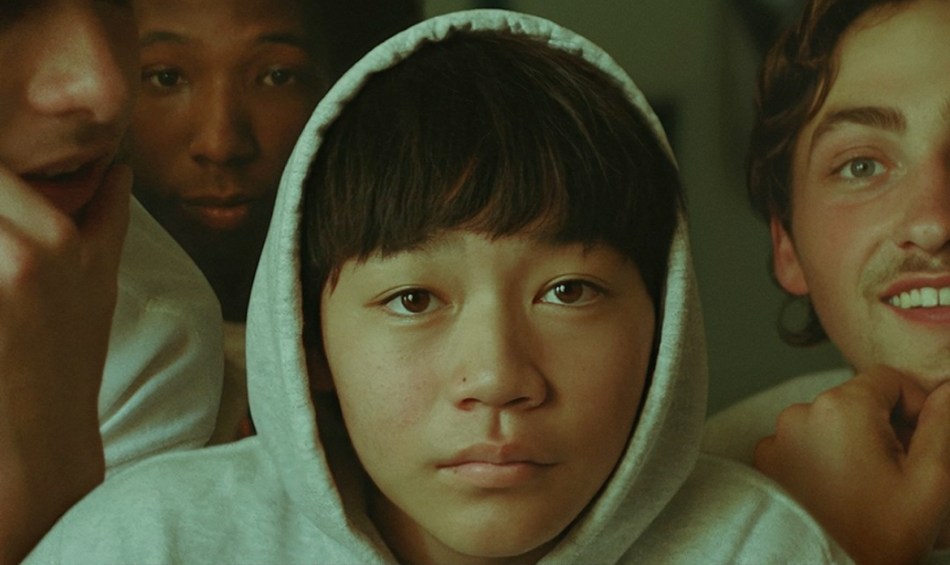
Set in 2008, the story follows a 13-year-old Taiwanese American boy, known as Dìdi (弟弟, meaning “younger brother” in Chinese) to his family, Wang Wang to his childhood friends, and Chris to some of his newer friends that he wants to impress. This name-shifting reflects how he navigates different spaces, constantly adapting his identity based on who’s around him.

Source: https://www.nbcnews.com/news/asian-america/-didi-film-asian-american-rcna163293
Dìdi embodies the messy journey of adolescence, where the need to belong and self-discovery go hand in hand. In one scene, surrounded by older kids, drinks, and drugs, he navigates a party with visible discomfort, trying to play along yet looking out of place. He swallows a joint in an attempt to fit in and spirals into hallucinations—a moment that reflects both adolescent impulsiveness and the sometimes misguided urge to impress. By the end of the night, we see him stumbling home and ultimately throwing up: a raw visual of how his attempt to fit in has left him shaken.
He often pretends to know more than he does, frantically searching for answers online to seem more knowledgeable or cool. He struggles with the same insecurities many of us face in adolescence, saying things out of character or acting in ways that don’t feel true to ourselves. You can’t help but feel for him as he navigates these growing pains, especially in moments of vulnerability. After a series of unsuccessful attempts at belonging, Dìdi confides to a MySpace bot, saying that everything’s a mess, everyone hates him, and he has no friends left.

This sense of isolation runs deeper for Dìdi, touching on the weight of intergenerational trauma. His mother’s life is marked by constant criticism, especially from her mother-in-law—Dìdi’s grandmother—who holds her responsible for any time Dìdi gets into trouble or uses foul language. For immigrant families, the pressure of “failing” is magnified. There is no guide for creating a life in an unfamiliar culture, and with each misstep, there’s an underlying fear of judgment that seems unavoidable. Dìdi’s mom shoulders a significant weight, caught between her own aspirations and the cultural expectations imposed upon her.

Source: https://m.imdb.com/video/vi2809316889/
Her isolation stems not only from her role as a mother but from her unmet dreams and ambitions, abandoned for the sake of her family. In her heart, she once dreamed of being an artist in New York, and through her painting, she continues to hold onto a piece of that former self. But as an immigrant mother, her passion is seen as frivolous, especially in her traditional family where “productive” pursuits are measured in financial stability and social conformity. Her artistic outlet and sacrifices are misunderstood, seen by others—especially her mother-in-law—as a distraction from her duties, reinforcing the narrative that she’s somehow failed as a wife and mother.

Source: https://www.indiewire.com/features/interviews/joan-chen-sean-wang-mom-didi-interview-1235029960/
When Dìdi gets into a fight defending himself, the fallout is not just between mother and son; it’s a flashpoint for all the underlying tensions in their family. In a moment of frustration, she scolds Dìdi and tells him others will judge her parenting, interpreting Dìdi’s actions as a reflection of her inadequacy. Dìdi, overwhelmed, accuses her of uselessness, belittling her artistic pursuits as meaningless “cloud-painting” that holds no value. He painfully declares his shame at being her son, yearning to be the kind of child she could boast about. This lashing out, though unintentional, exposes the deep wounds each of them carries. Her hurtful retort, “Do you know how happy I’d be if I didn’t have you?” is a stark glimpse into her struggle showing the frustration of unmet expectations and the reality of having sacrificed so much.
These words, as painful as they are, come from a place of deep hurt on both sides. Dìdi lashes out at his mom not because he means it, but because he’s hurting and doesn’t know how to express it. He runs away, but later returns, asking his mom if she’s ashamed of him because she didn’t come after him. In a tender moment, his mom tells him no, she’s not ashamed—far from it. She opens up, explaining that while she once dreamed of being an artist in New York, raising Dìdi and his sister became her true dream. She realizes that through her children, she found a new purpose and says “How can I be ashamed? I am so proud. But sometimes, it’s a little hard.”
This is something many children of immigrants long to hear: the reassurance that their parents are proud of them, even when cultural expectations make it difficult to express that love openly.
While watching Dìdi’s relationship with his mother unfold on screen, I found myself reflecting on my own experiences as the child of immigrants. Growing up, I often longed for a certain openness with my family—a reassurance that we were all on the same team, even if we rarely said it. Like Dìdi, I remember moments when frustration overwhelmed me when I lashed out with words I didn’t mean. My outbursts usually stemmed from wanting to be heard and understood, but my parents’ response focused on the practical: “Don’t matter. Study hard. Get a good job.” In immigrant households, conversations around emotions or aspirations can feel muted or off-limits. Instead, we’re often taught to prioritize survival and success in a new world that can seem unforgiving.

Source: https://www.journal-topics.com/articles/didi-offers-difficult-yet-honest-look-at-growing-up/
What didn’t occur to me at the time was that we were all trying to figure ourselves out. For immigrant families, adapting to a new cultural context can mean losing the familiar while constantly conforming to something that may not quite feel like “home.” My parents, like Dìdi’s mom and grandmother, had to rebuild their identities in a place that didn’t always see or value their pasts. And while they may not have been able to verbalize it, they, too, were just doing their best. This realization was something I had to grow into, but watching Dìdi struggle with his mom helped bring it to the surface. His mom’s own journey of reimagining her dreams and purpose mirrored what so many immigrant parents go through—compromising their desires to pave a path for their children.

Source: https://www.gq.com/story/didi-sean-wang-interview
Dìdi’s words may have been hurtful, but they were a reflection of his own pain and confusion. The film shows how both him and his mother are navigating their unique, deeply personal challenges, and that their misunderstandings are rooted in the complexities of immigrant life. This moment in the film shows the importance of being kinder to ourselves and to our parents, who often carry dreams, struggles, and fears we may never fully see. It’s a reminder that they, too, are adjusting, healing, and growing in their own ways.
For many of us who grew up between cultures, there is an unspoken desire for affirmation from our parents—the reassurance that they’re proud of us, even if cultural expectations make it difficult to express that pride openly. Dìdi captures this longing beautifully, showing the bittersweet journey of trying to understand one another across a generational and cultural divide. It’s a reminder that beneath the surface, there’s a shared resilience, and that understanding this can help us find compassion for both ourselves and our immigrant parents as we each try to find our way.

Source: https://www.vulture.com/article/didis-perfect-ending-explained-by-sean-wang-and-joan-chen.html
 Generasian
0 comments on “Dìdi: A Reminder to Be Kinder to Ourselves and Our Immigrant Parents”